


Transformer Core Engineering Notes · CF-N227
A top-up introduces a second material into an existing insulation system. Similar colour, viscosity or a shared label such as “mineral oil” does not prove that the final mixture is acceptable. The correct review identifies the existing fluid, the proposed addition and the condition of the transformer before any mixing is approved.
Identify what is already in the tank
Use commissioning records, later top-up history and laboratory information to establish the existing fluid. A faded label or an assumed fleet standard may not reflect previous maintenance. Record inhibitor status where applicable and any known liquid treatment. If identity is uncertain, the uncertainty itself needs resolution by the asset specialist and fluid supplier. Adding a familiar product does not turn an unknown mixture into a documented insulation system.
Assess the resulting mixture, not two separate certificates
Two fluids can individually meet their own specifications without their mixture meeting the required properties. Compatibility review should address the actual blend proportion and relevant chemical, dielectric, thermal and material effects. For different fluid families, changes in fire classification or moisture interpretation may also matter. Obtain the applicable supplier and OEM approval; do not assume a universal allowable mixing percentage from an unrelated product guide.
Treat cleanliness and handling as separate controls
Correct product selection does not prevent contamination during transport, storage or transfer. The approved procedure should control containers, hoses and equipment previously used with other liquids. Sampling and handling must be performed by qualified personnel under the manufacturer’s instructions and site safety rules. A certificate for fluid at the supplier’s factory is not evidence of its condition after transfer into the transformer. The acceptance plan should identify the final checks that matter.
Document why top-up was required
A low oil indication may reflect temperature, an instrument issue or an actual loss of liquid. Determine the cause rather than treating top-up as the complete repair. Record the added product, batch, quantity and date, and update the maintenance baseline. Where a leak or seal problem exists, address it through the approved maintenance process. Repeated top-up without cause analysis can conceal a continuing defect and make future condition trends difficult to interpret.
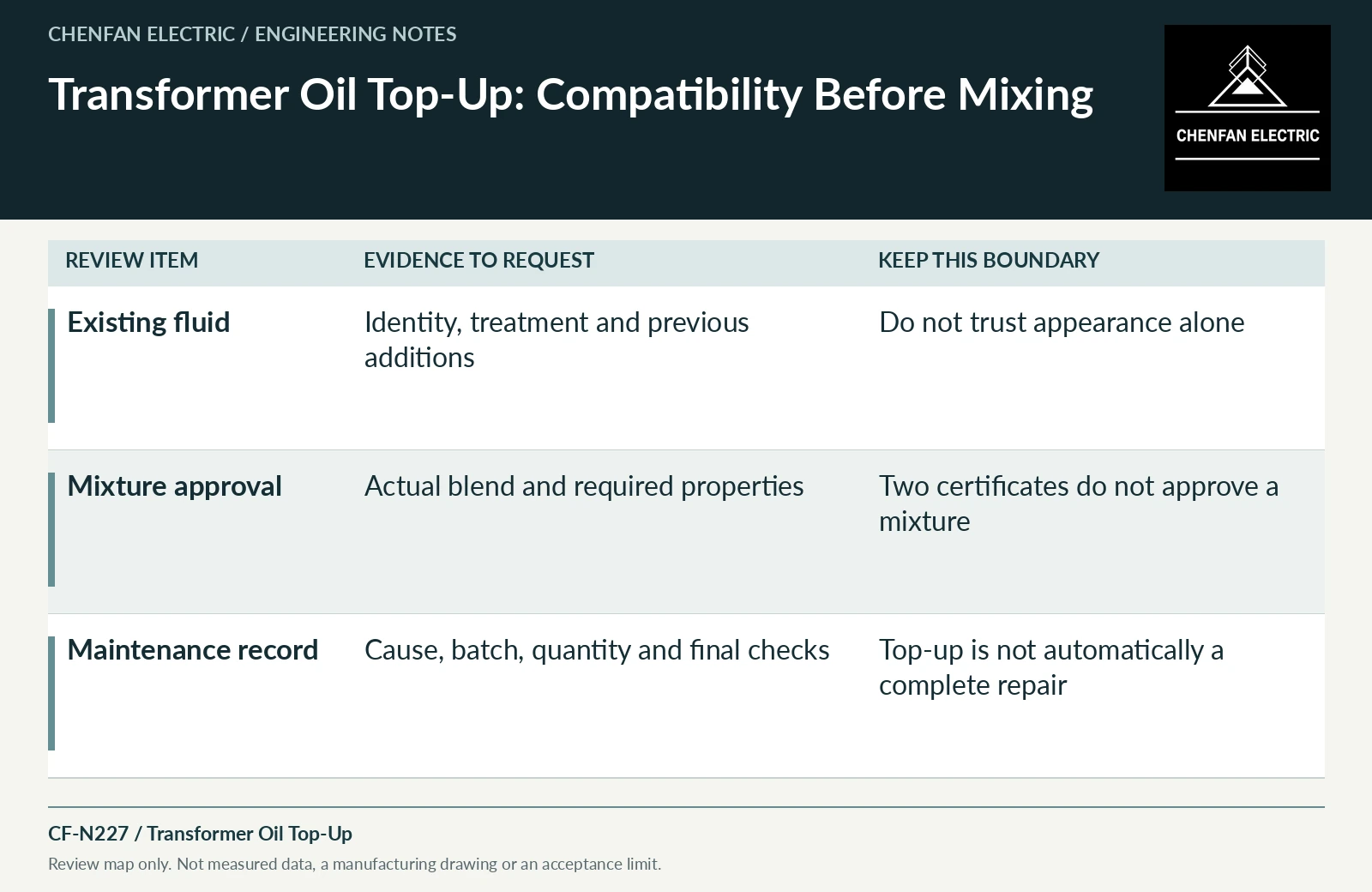
| Review item | Evidence to request | Boundary to preserve |
|---|---|---|
| Existing fluid | Identity, treatment and previous additions | Do not trust appearance alone |
| Mixture approval | Actual blend and required properties | Two certificates do not approve a mixture |
| Maintenance record | Cause, batch, quantity and final checks | Top-up is not automatically a complete repair |
References and scope
- IEEE C57.166-2026 — Acceptance and Maintenance of Insulating Liquids in Transformers and Related EquipmentPublic standard abstract · Acceptance and maintenance of insulating liquids; equipment type, liquid family and compartment must be identified.
- IEC 60296:2020 — Mineral insulating oils for electrical equipmentPublic standard abstract · Mineral insulating-oil specification; fluid acceptance and equipment performance are different questions.
- Retrofilling with FR3 fluidManufacturer application page · Retrofill is an equipment/material/process review, not a nameplate uprating by fluid substitution alone.