

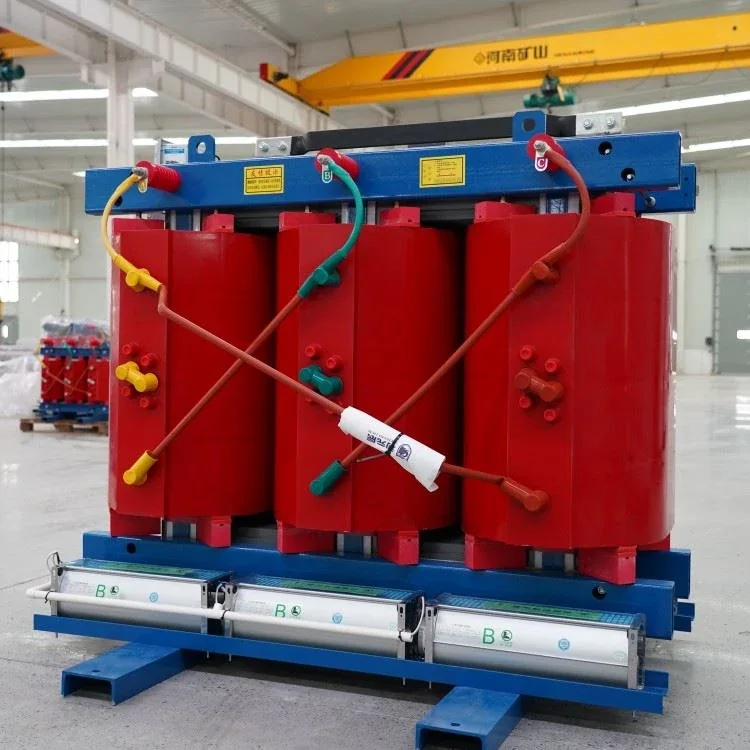
A cast-resin transformer specification needs to connect the cooling arrangement to the thermal class, temperature controls and enclosure. Chenfan Electric’s published dry-type supply configuration covers complete units through qualified manufacturing partners for the agreed ratings and indoor installation requirements.
| Item | Supply configuration |
|---|---|
| HV insulation | Epoxy cast-resin windings |
| Thermal class | Class F or H, as specified |
| Cooling | AN; AF with cross-flow fans |
| Conductors | Copper or aluminium |
| Enclosure | Open core-and-coil or enclosure to the specified IP rating |
| Monitoring | Winding temperature sensors and controller for fans, alarm and trip |
| Frequency | 50 / 60 Hz |
| Design basis | IEC 60076-11 or the specified project standard |
Specify the room as well as the transformer
AN denotes natural-air cooling; AF uses forced air from the fan arrangement. Confirm the fan duty, power supply and control functions with the selected rating. No general percentage increase is assigned to AF operation: the rating belongs to the offered design.
State whether the unit is open or enclosed. For an enclosure, give the required IP rating, cable-entry direction, terminal arrangement and ventilation conditions. The room layout and available airflow need to be considered with the enclosure rather than left until installation.
Define the equipment evidence
The published routine-test scope covers winding resistance, voltage ratio and phase displacement, impedance and load loss, no-load loss and current, dielectric tests and partial-discharge measurement on the complete transformer. The order should identify the applicable test requirements and agreed reporting basis.
For a dry-type transformer enquiry, include rated power, HV/LV voltages, frequency, vector group, impedance, thermal class, cooling and enclosure. Confirm the general arrangement and nameplate data against that specification.
This table keeps the existing supply choices together so procurement can close the configuration systematically. It is not a specific unit’s factory report: it introduces no assumed kVA rating, partial-discharge acceptance value, loss result or site-performance claim.