

A waste-to-energy unit auxiliary transformer should be specified from a process-state load list. Fans, pumps, material-handling drives, controls and other services can operate before generation begins and after it stops. Net plant export or generator nameplate power cannot define the auxiliary transformer duty or the supply needed during startup, shutdown and cooldown.
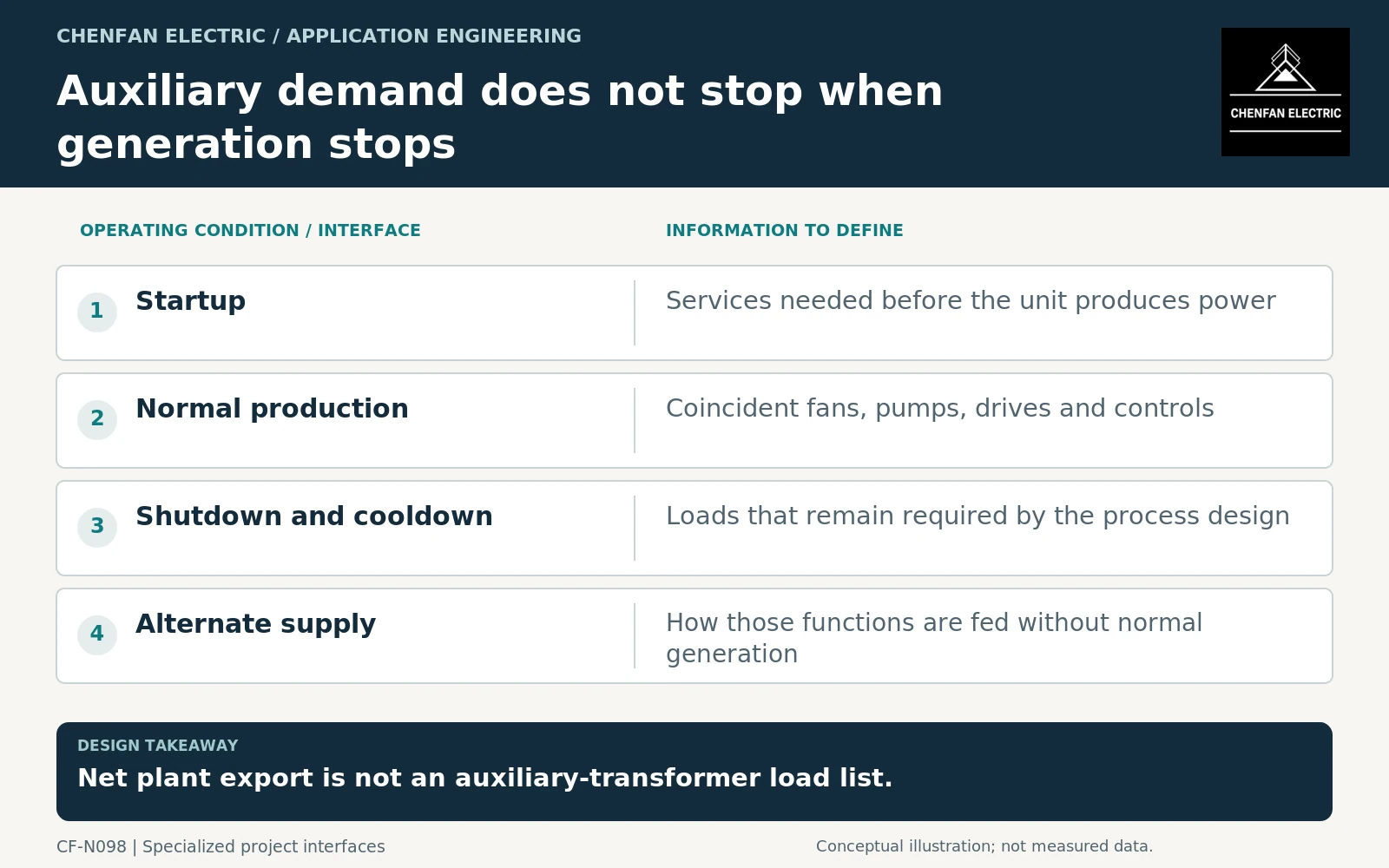
Organize the list by operating state
The process designer should identify the loads required during cold startup, normal production, reduced output, controlled shutdown, cooldown and abnormal loss of the normal source. This article does not prescribe combustion or safety-system operating requirements.
For each load, record electrical input, starting method, duration, permitted overlap and supply-continuity classification. Distinguish connected equipment from the combinations that actually operate together.
General transformer application guidance supports rating and connection review, but the process state determines the relevant auxiliary duty. [1]
A motor marked standby should not automatically be excluded from every maximum-demand case. Testing, transfer or recovery can create overlap unless the approved controls prevent it.
Separate unit generation from auxiliary supply
Identify how auxiliaries are supplied before the generator is available and after it is disconnected. The single-line diagram should show normal, startup and alternate paths, including any common equipment.
A plant may have low or zero net export while auxiliary demand remains material. Conversely, a high generator output does not mean every auxiliary is at maximum demand. Use the actual state-based load schedule rather than a fixed percentage of generation.
The enquiry should identify whether a transformer serves only one unit or also common plant services. Shared pumps, treatment systems or controls can create dependencies between units that are not visible in a unit-only equipment list.
Study starting and restoration combinations
| Process state | Electrical case to retain |
|---|---|
| Startup | Required motor starts before normal generation |
| Normal production | Sustained coincident auxiliary demand |
| Reduced output | Changed drive and auxiliary operating points |
| Shutdown or cooldown | Services that continue after main output falls |
| Source restoration | Approved restart sequence and alternate-source limits |
Motor-acceleration and sequence-of-events tools support analyzing the actual starting devices and source conditions. They do not replace the process team’s confirmation that the proposed sequence is operationally acceptable. [2] [3]
For drive-fed loads, request converter input data and relevant waveform evidence. The mechanical output of a fan or pump is not automatically transformer input apparent power.
Freeze the load list as a controlled document
The transformer supplier should receive the approved state matrix, current schedule, source configurations and environmental conditions. Ask it to identify the governing cases and any duration or cooling restriction.
Thermal assessment should use the appropriate equipment framework and actual chronology. Mineral-oil loading guidance is one defined approach, not an unlimited emergency allowance for process recovery. [4]
Acceptance should reconcile the implemented process controls, electrical transfer arrangement and transformer schedule. A later change in cooldown services or startup overlap can alter duty without changing the plant’s advertised generation capacity.
The practical deliverable is a load list that remains meaningful when the unit is not generating. It shows which services operate, how they start and where their supply comes from in every required process state. That is the basis for an auxiliary-transformer specification, not net export megawatts.
Core procurement checkpoint: Turn the auxiliary-load list into controlled core variants
A waste-to-energy plant’s auxiliary list can lead to more than one transformer design. Once those designs are approved, issue a core schedule with separate drawings, quantities and material requirements rather than a single plant-level capacity. Maintain identification through cutting, packing and receiving so that similar-looking lamination sets are not mixed between approved auxiliary-transformer variants.
For the core enquiry: Auxiliary design IDs; approved core drawings; quantity per variant; material specification; packet identification and receiving checks.