

Through-fault withstand has two linked but distinct dimensions. Thermal duty depends on current magnitude and clearing time, while dynamic duty is driven by high instantaneous electromagnetic forces associated with the asymmetrical peak. Protection must therefore clear external faults quickly enough for the transformer duty curve, but procurement also needs confidence that mechanical design and short-circuit verification match the specified system fault level.
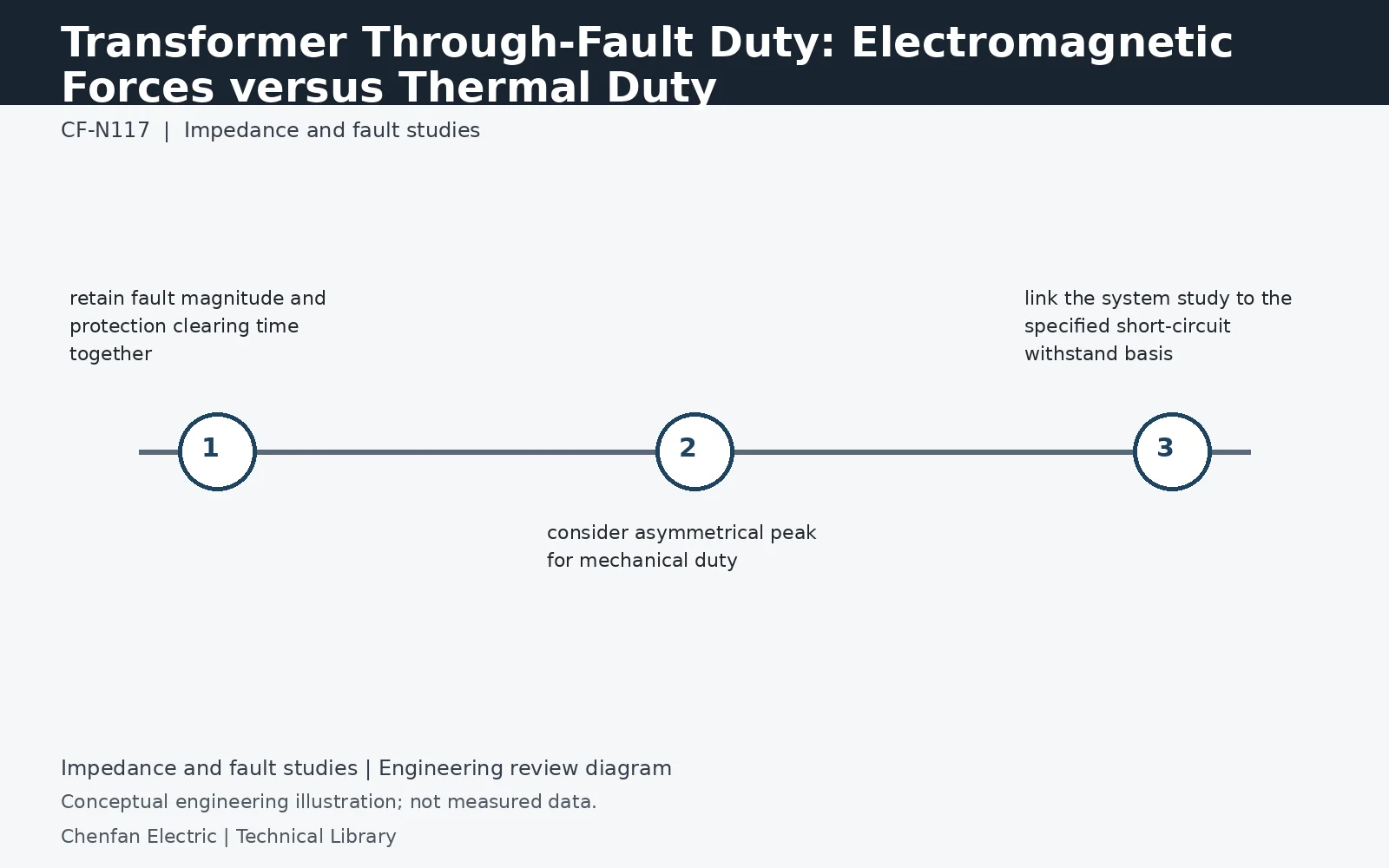
Peak force and heating answer different questions
For a fixed winding geometry, electromagnetic force scales approximately with the square of instantaneous current. A 20% increase in peak current can therefore imply roughly 44% greater force, even if fault duration is unchanged. Thermal duty is instead related to the time integral of current squared, with temperature and material effects considered in the applicable method. Equal I²t values do not establish equal mechanical severity. Neither a fast relay nor a satisfactory temperature-rise test alone demonstrates short-circuit mechanical withstand.
Use total fault-clearing time, including backup
The relevant exposure continues until current is interrupted, not merely until a relay issues a trip. Add the applicable relay, communication and breaker operating times, and evaluate the backup clearing case if the primary breaker fails. Reclosing can impose repeated mechanical and thermal exposure, so the intended protection philosophy matters. Compare the current-duration result with the transformer's applicable through-fault limits and equipment category. Do not use a through-fault coordination curve as evidence for a continuous or emergency overload rating.
Ask what the short-circuit verification actually covers
IEC 60076-5 distinguishes thermal and dynamic short-circuit withstand and recognizes different verification approaches. Procurement should identify the agreed evidence: applicable test records, design evaluation or another contractually accepted basis. Check its relevance to winding geometry, clamping, rating and specified system duty rather than accepting a generic “short-circuit tested” statement. When a previous test is offered as design-family evidence, obtain the manufacturer's explanation of applicability. Any changed peak current, clearing time or winding construction needs an explicit assessment of whether that evidence still applies.
Technical reference framework
[1] IEC 60076-1:2011 — Power transformers, General.
[2] IEC 60076-5:2006 — Ability to withstand short circuit.
[3] IEC 60076-8:1997 — Application guide.
[4] IEEE C57.109-2018 — Liquid-immersed transformer through-fault-current duration.