

An irrigation transformer should be specified for seasonal pump duty, remote-source conditions and the off-season environment. Low annual energy consumption does not prove that motor starting is easy or that prolonged idle periods are harmless. The enquiry should distinguish peak-season operation, first starts after inactivity and the conditions while the installation is not producing useful work.
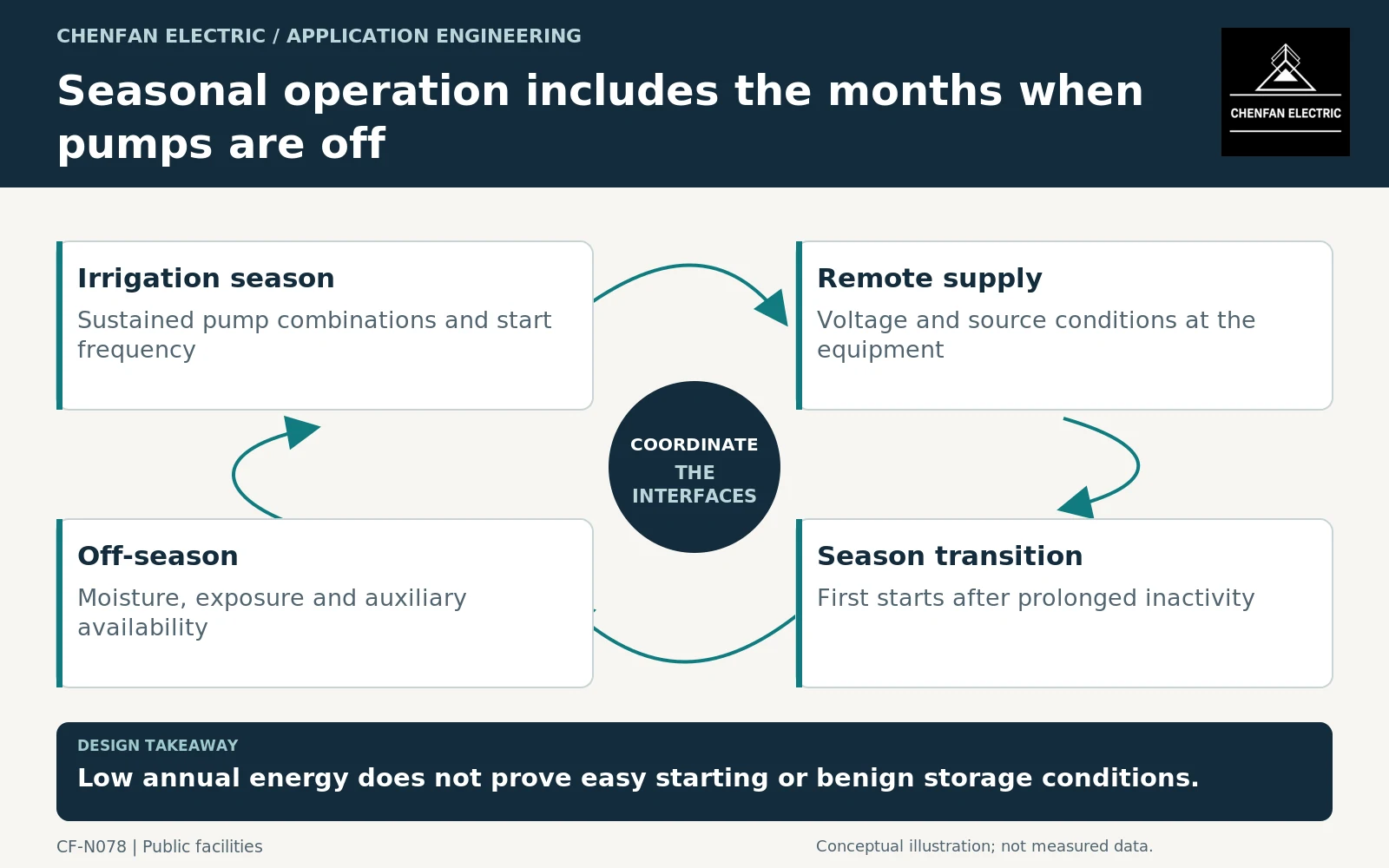
Define the seasonal operating envelope
Record which pumps operate together, daily run duration, start frequency and the expected season length. Include any crop or water-demand scenario that changes the normal combination. The schedule should come from the irrigation operation rather than an assumed annual utilization percentage.
Motor electrical input and starting method are required; pump shaft power alone is insufficient. Direct starting, soft starting and drive-fed operation should be represented with their actual characteristics.
General transformer application guidance addresses loading and voltage behavior, while motor-starting analysis tools show the importance of modeling the starting device and source together. [1] [2]
Check the remote supply boundary
A remote feeder can have operating voltage and source-impedance conditions different from a strong industrial bus. Obtain the relevant supply cases and cable information for the motor-starting and voltage review.
A transformer that carries the pump’s running current does not automatically ensure successful acceleration. Voltage at the motor, process load and permitted starting time require coordinated assessment. Avoid selecting a universal transformer oversizing factor as a substitute for that study.
A useful case set includes a first pump start, an additional pump starting with others running, and any permitted alternate-source operation. Identify manual modes that could bypass an assumed sequence.
The chosen tap position should follow the approved voltage study and operating method. Do not prescribe field tap changes or switching steps from a general article; those require the equipment instructions and authorized operating procedure.
Treat the off-season as a service condition
During prolonged inactivity, the transformer and accessories may experience moisture, temperature cycling, dust or vegetation-related access changes. State whether the unit remains energized and whether heaters or monitoring retain power.
An enclosure ingress classification under IEC 60529 does not establish freedom from condensation or complete suitability for every idle condition. [3] Environmental preservation requirements should come from the supplier and the actual installation exposure.
If the transformer remains energized throughout the off-season, its excitation and auxiliary duty should be recorded separately from pump energy. If it is isolated, the return-to-service requirements and availability of auxiliaries become relevant.
Specify the repeatable annual cycle
The enquiry should include the peak-season current schedule, starting cases, supply conditions and off-season state. Thermal assessment should use the applicable equipment model and actual initial conditions rather than annual average load. [4]
The handover should preserve the approved pump combinations and start restrictions. Adding a larger pump or changing the irrigation schedule can alter transformer duty even when the season length stays the same.
The useful specification supports a complete annual pattern: reliable starting during the season, sustained pumping under the stated source conditions and appropriate preservation between seasons. “Agricultural duty” is too broad to establish any of those outcomes without the underlying operating and environmental data.
Core procurement checkpoint: Plan for seasonal storage at the actual supply boundary
For irrigation service, the equipment manufacturer should assess starting duty and the energized season before releasing the design. A core order can then specify geometry, steel and agreed inspection records, with packing and storage instructions for any delay before assembly. Do not treat a seasonal shutdown as evidence of negligible lifetime losses or as a substitute for controlling moisture during storage.
For the core enquiry: Approved design reference; core drawing; material-loss basis; expected storage interval; packing and receiving inspection requirements.