

Colour is a poor acceptance criterion for a rust complaint.
The useful questions are what changed at the surface, how far it extends, and whether the affected laminations can still meet their intended function.
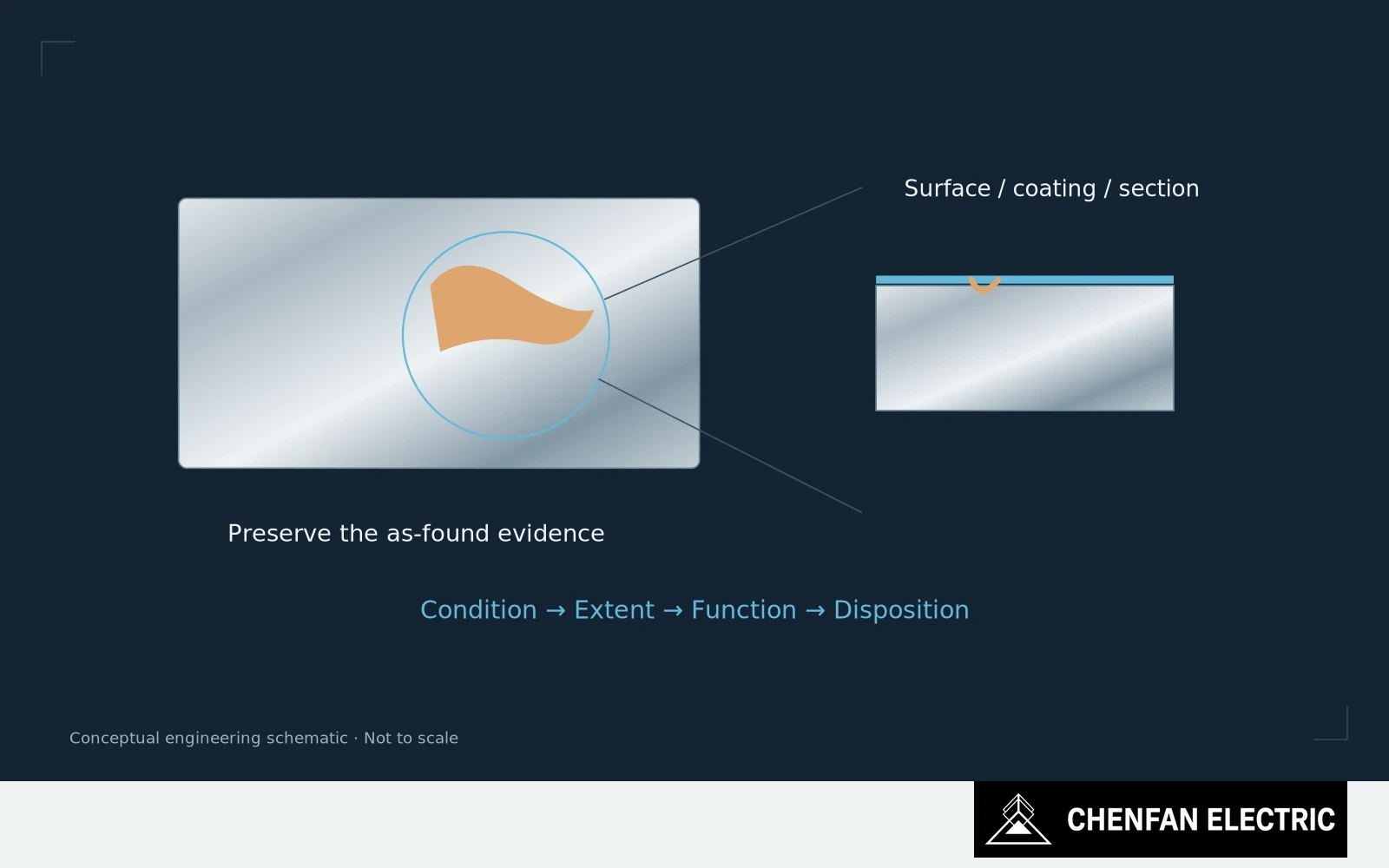
Preserve evidence and identify the surface condition
Start by distinguishing an actual corrosion product from staining or a coating colour variation. A photograph may locate the concern, but it rarely establishes coating integrity, pitting depth, loose contamination or conditions between stacked sheets.
Keep the original evidence before cleaning. Record the affected location, extent and exposure history, and compare it with unaffected material from the same shipment where available. Cleaning first can remove information needed to decide whether the condition is isolated or more widespread.
If corrosion is confirmed, inspect the functional consequences. Loose products may compromise cleanliness. Significant surface attack can affect contact and coating condition. Material loss, where present, is a different concern from a superficial mark. The assessment should address the observed condition rather than assume a fixed loss penalty from the amount of visible orange colour.
Assess coating, contact and hidden interfaces
Location matters. An accessible outer surface and corrosion concealed across packet interfaces do not offer the same inspection access or assurance. A satisfactory check on one exposed sheet cannot automatically release an inaccessible affected region.
Do not treat oxide as a useful replacement for the specified insulation coating. Its presence does not establish controlled interlaminar electrical behaviour. Where coating function is in doubt, use an agreed evaluation method and appropriate samples, with the steel producer involved when necessary.
Equally, avoid aggressive cleaning as a default repair. Abrasion can remove coating or create debris; chemical treatment can leave residues or alter compatibility with later manufacturing. Any recovery method needs approval for the specific material and assembly route.
Approve recovery only against verified remaining function
Disposition may range from acceptance of a verified superficial condition to controlled rework, segregation or replacement. There is no defensible universal percentage of visible rust that separates those outcomes across all core designs.
The release record should state what was examined, what remained inaccessible, the evidence for functional acceptability and any action needed to prevent recurrence. A passing aggregate magnetic test may be useful, but it does not answer every cleanliness or localized insulation question.
Make the decision from the damage mechanism and verified remaining function. Neither “only surface rust” nor “any colour means scrap” is an adequate technical assessment.
Practical takeaway
The colour of a suspected rust mark does not establish its functional severity.
Chenfan Electric manufactures custom transformer cores according to customer drawings. Where applicable to the specified material and core design, agreed process controls include burr height below 0.02 mm and stacking factor above 97%. Measurement methods and acceptance conditions are defined for each order.