

The most consequential line on a CRGO certificate may be the test-method note, not the W/kg value.
Before using that number in a core purchase, establish what was actually measured: specimen type, excitation, frequency, preparation and reporting convention.
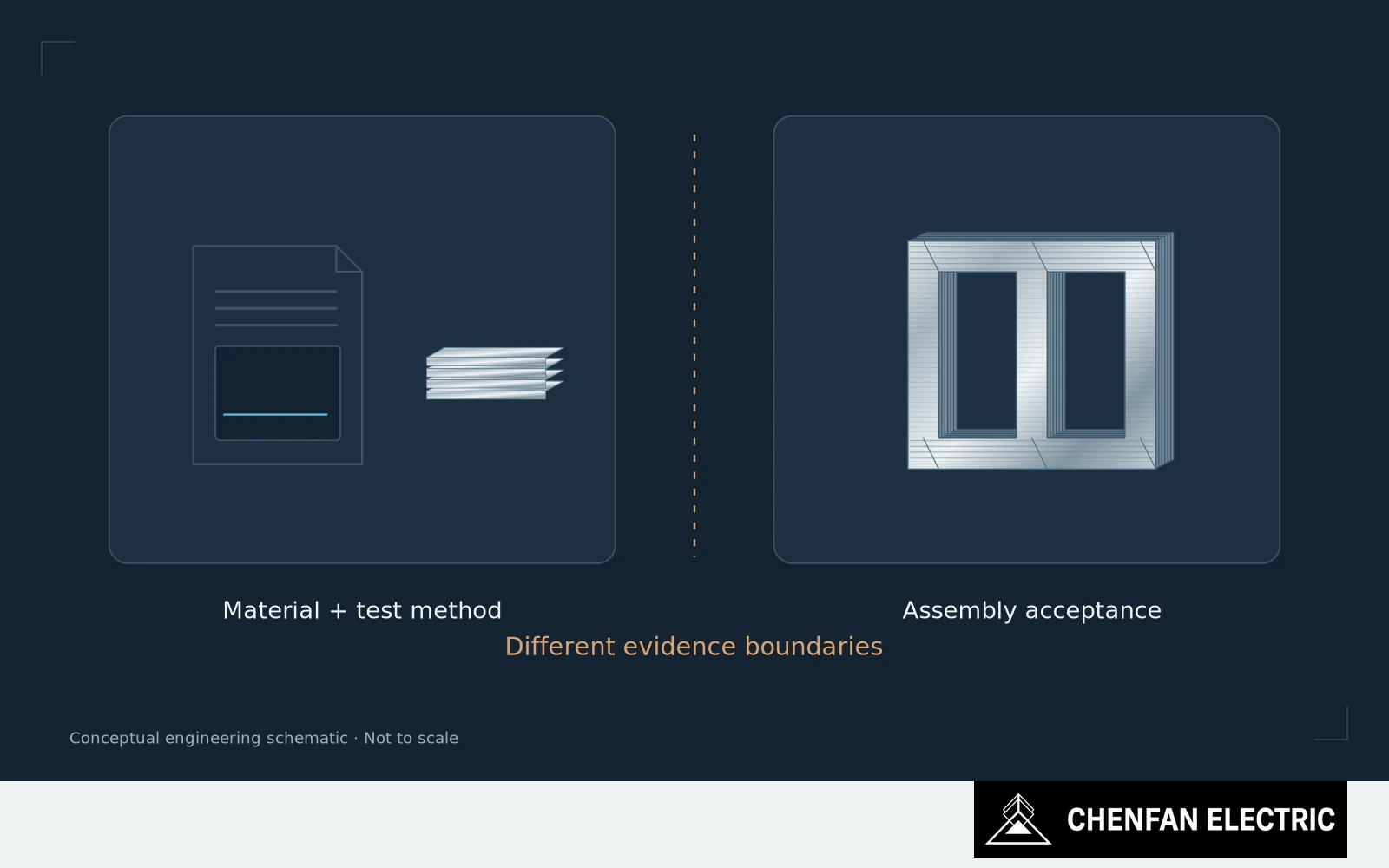
Identify the material test behind the certificate
IEC 60404-8-7:2020 covers fully processed grain-oriented electrical steel. It does not turn a compliant steel delivery into an acceptance test for an assembled transformer core. The distinction matters before any discussion about supplier workmanship begins.
Consider the denominator in a design estimate. Is the material loss value a guaranteed maximum, a coil-specific measurement or a typical catalogue value? Those are different inputs. Multiplying each by the same core mass does not produce three equally defensible guarantees.
Method compatibility needs similar care. Epstein-frame and single-sheet results are not interchangeable merely because both are expressed in W/kg. Where a standard or producer applies a defined conversion, retain the stated conditions and basis. Do not invent a general correction for every grade, flux level and test arrangement.
Connect the certificate to the installed laminations
Then follow the certificate into production. Does its coil identifier survive slitting? Can the cut packets installed in this particular core be connected to that identifier? A perfectly authentic certificate can still be irrelevant to the delivered assembly if the material link is missing.
Finally, identify the evidence that the certificate cannot contain. It cannot report the joint fit achieved after stacking, the stress introduced by the actual clamp system, or the condition of the magnetic circuit after the agreed handling sequence. Those belong to manufacturing and finished-core records.
I would divide the purchasing file into three linked records: material conformity, manufacturing identification and assembly acceptance. Each should answer a different question. Requiring the same certificate in three folders adds paperwork, not coverage.
Separate material conformity from core acceptance
This also makes disputes easier to resolve. A material discrepancy goes back to the coil and its test basis. A core discrepancy goes to the serial number, configuration and agreed test. Neither party has to argue from a document that was never intended to prove the disputed condition.
The certificate remains essential. What changes is its job: it establishes the starting material, while the acceptance plan establishes whether the purchased assembly meets its own requirements.
Ask the supplier to show that connection on one finished order. The quality of the answer is more revealing than another scan of a mill stamp.
Practical takeaway
The certificate method and chain of identity can matter more than its headline loss number.
Chenfan Electric manufactures custom transformer cores according to customer drawings. Where applicable to the specified material and core design, agreed process controls include burr height below 0.02 mm and stacking factor above 97%. Measurement methods and acceptance conditions are defined for each order.