

A core can be cosmetically acceptable, dimensionally correct, structurally unsuitable and magnetically within limit at the same time.
One overall “quality score” can hide that distinction.
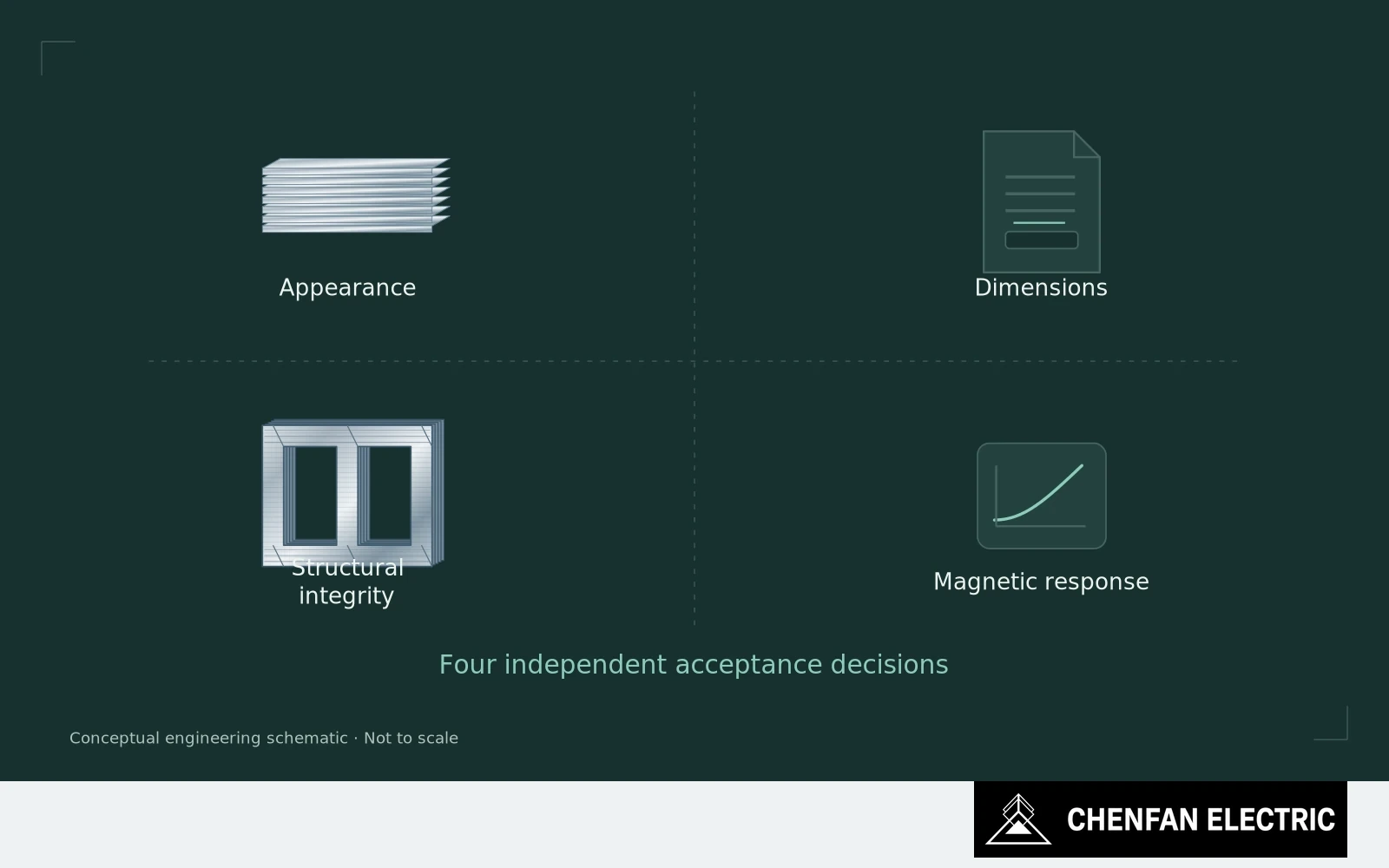
Distinguish appearance, dimensions, structure and magnetics
Cosmetic quality concerns agreed appearance requirements. It matters where a finish standard or cleanliness expectation has been specified, but its severity should not be borrowed automatically from another quality category.
Dimensional quality concerns the geometry and interfaces actually defined by the drawing. A dimension is meaningful only with its datum, measurement method and relevant support condition. Passing isolated dimensions does not necessarily establish the complete assembly relationship.
Structural quality concerns the core’s integrity in the intended manufacturing, handling and delivery states. A sound magnetic reading does not demonstrate that a restraint or support arrangement is adequate for a planned operation.
Assign the appropriate technical release authority
Magnetic quality concerns the response under defined excitation and test conditions. A visually tidy assembly can still have an unacceptable loss or current result. Conversely, a magnetic pass does not certify every inaccessible surface or mechanical interface.
These categories interact, but they are not interchangeable. A displaced lamination may create dimensional, magnetic and insulation concerns. That calls for coordinated assessment, not an argument about which department’s label should dominate the report.
For a nonconformity, identify the primary requirement that was missed and the additional functions potentially affected. Assign the release decision to the people qualified to resolve those functions. A commercial concession alone cannot establish that an unverified structural condition is suitable.
This also improves supplier comparison. Keep mandatory functional requirements as gates. A favourable appearance rating should not compensate numerically for an unresolved assembly interference or an invalid magnetic test.
Keep the scope of every concession explicit
Use the same separation when accepting a minor deviation. State exactly what has been accepted and what remains subject to normal requirements. Acceptance of a cosmetic mark should not become an undocumented waiver of coating integrity or cleanliness.
The final release can remain simple, but the evidence behind it should preserve the four decisions. That makes later questions easier to answer without reopening every aspect of the core.
When procurement and engineering disagree about “quality,” first check whether they are discussing the same category. Many disputes become manageable once the actual requirement and release authority are named.
Practical takeaway
A single quality verdict can conceal different outcomes for appearance, dimensions, structure and magnetics.
Chenfan Electric manufactures custom transformer cores according to customer drawings. Where applicable to the specified material and core design, agreed process controls include burr height below 0.02 mm and stacking factor above 97%. Measurement methods and acceptance conditions are defined for each order.