

A coating file can contain product certificates and still leave the finished tank’s process history unclear. The useful record links materials, preparation, application conditions and final repairs to the tank serial number and defined regions. [1]
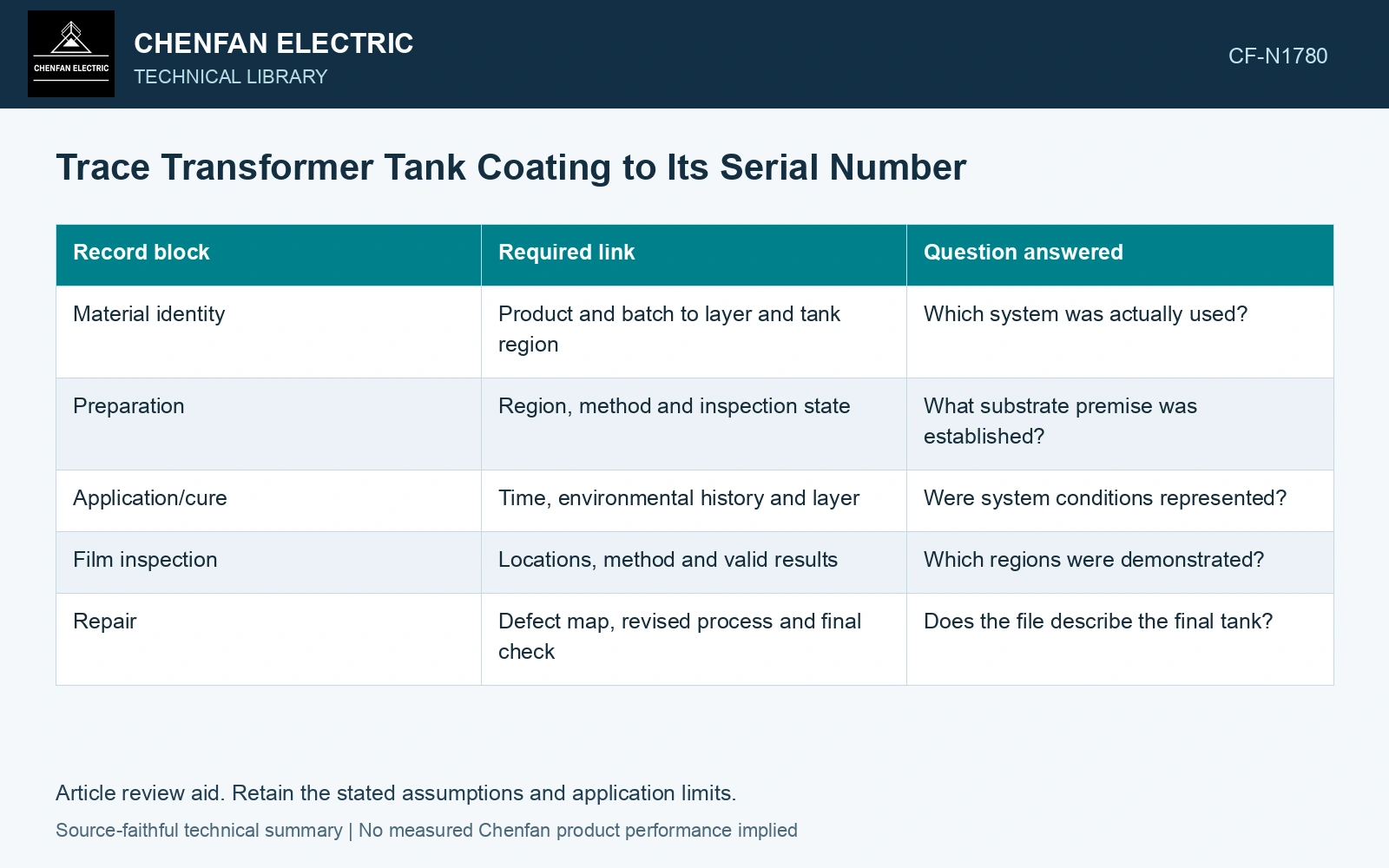
| Record block | Required link | Question answered |
|---|---|---|
| Material identity | Product and batch to layer and tank region | Which system was actually used? |
| Preparation | Region, method and inspection state | What substrate premise was established? |
| Application/cure | Time, environmental history and layer | Were system conditions represented? |
| Film inspection | Locations, method and valid results | Which regions were demonstrated? |
| Repair | Defect map, revised process and final check | Does the file describe the final tank? |
Preserve chronology, not only certificates
Mixed or applied material needs the relevant preparation and use history required by its product system. A sealed-can certificate identifies a batch; it does not prove the working mixture or application condition.
Environmental readings should align with the areas coated at that time. Film results need positions and method limitations. A single mean without a location record can hide an unexamined corrugation or repaired attachment.
Link the actual coating product, preparation, local environmental history, application and cure evidence to each coated and repaired region. [2]
Reconcile coating batches to the tank map
Assume 80 m² of a tank is mapped to coating batch A and 20 m² is repaired with batch B, but only A has recorded cure history. The unclosed region is 20% of coated area. Retrieve the actual repair process evidence before acceptance; a certificate for the majority area does not qualify the repaired boundary.
Close the record after the final fabrication stage
Later welding, transport or assembly can damage the accepted film. Add the affected location and repair evidence rather than leaving the original inspection as though nothing changed. Keep the earlier state for traceability and mark the final accepted revision.
References
- ISO, ISO 12944-7:2017, Paints and varnishes — Corrosion protection of steel structures by protective paint systems — Part 7: Execution and supervision of paint work.
- USACE, NAVFAC and AFCEC, UFGS 09 97 13.17, Three Coat Epoxy Interior Coating of Welded Steel Petroleum Fuel Tanks, May 2022, reference set July 2026.