


Transformer Core Engineering Notes · CF-N237
A dried active part can absorb moisture again during storage or assembly. The risk depends on the atmosphere, temperature, material and exposure history, not merely the clock time since drying ended. A practical manufacturing plan defines controlled conditions and how excursions are assessed, rather than relying on a universal maximum number of hours.
Define the atmosphere around the insulation
Record the relevant environmental measurements and the temperature of the assembly. Relative humidity alone describes air at its measured temperature; it is not a complete description of the moisture exposure of a hot or cooling component. The process plan may use additional atmospheric indicators where appropriate. Specify the storage enclosure, protective atmosphere or packaging and the method of monitoring it. “Kept indoors” does not establish a controlled moisture environment.
Track cumulative exposure, including interruptions
Assembly can involve several openings, inspections and waiting periods. Record them as a connected history rather than resetting the clock at each work shift. A short exposure under poor conditions may matter more than a longer period in a controlled environment. The approved procedure should define how duration and conditions are evaluated together. Do not invent an exposure allowance from an unrelated factory practice or from the nominal size of the transformer.
Moisture can affect dimensions as well as insulation
Weidmann describes moisture-related swelling, shrinkage and possible damage in insulation materials. This means moisture control also supports dimensional and mechanical consistency. A component that changes shape can affect winding fit or support, even before a dielectric issue is apparent. Packaging or an oil film can slow moisture exchange, but should not be described as an unlimited barrier. Follow the material supplier’s handling requirements for the actual component and condition.
Predefine the response to an excursion
If a protective atmosphere is lost or the exposure conditions exceed the approved envelope, the manufacturing team needs a defined review route. The response may involve measurement, additional processing or engineering assessment under the validated procedure. Do not simply continue because the surface looks dry. Link any disposition to the active-part record and confirm that subsequent impregnation or assembly is still authorized. This prevents an undocumented interruption from becoming a hidden quality assumption.
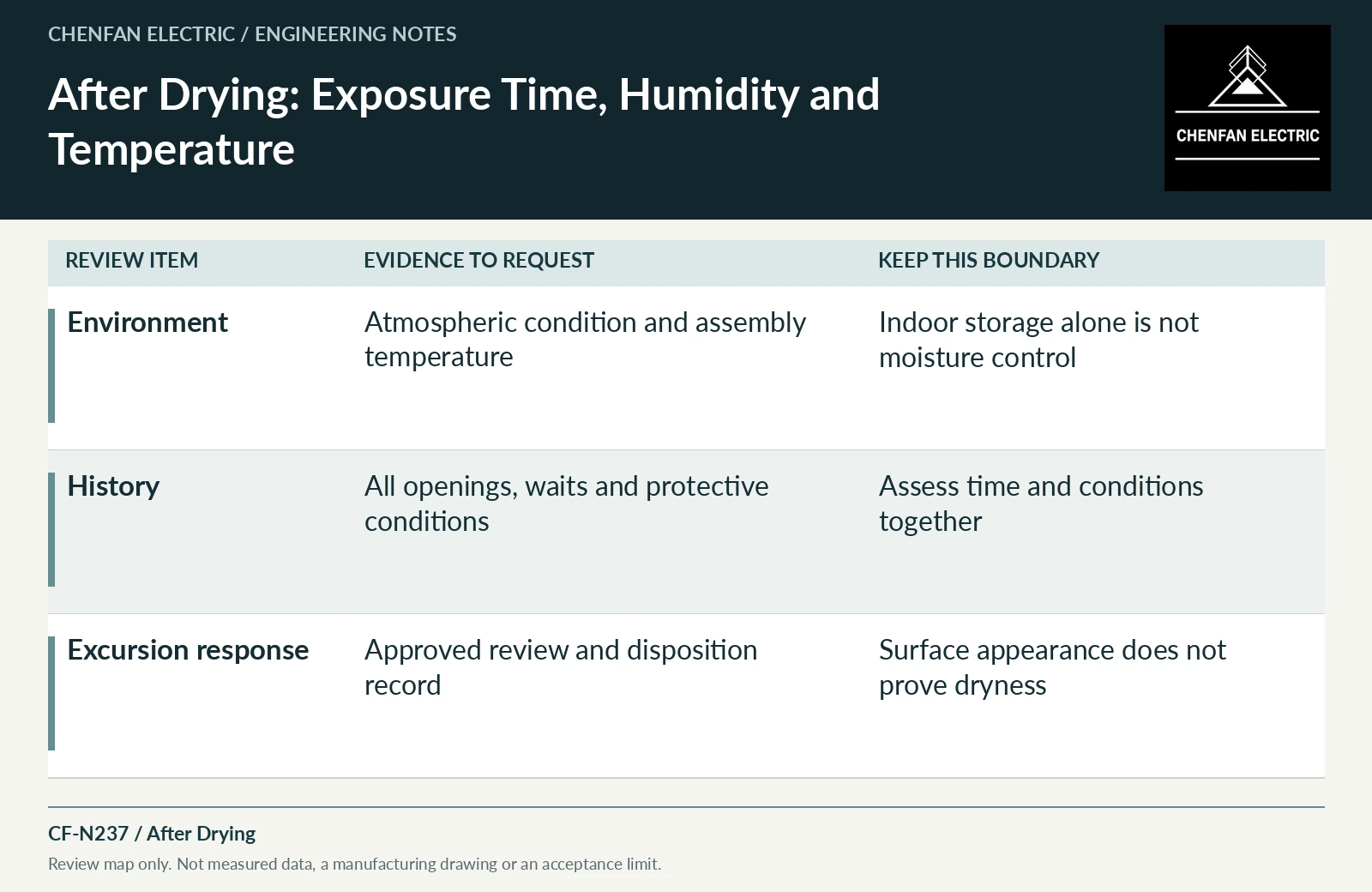
| Review item | Evidence to request | Boundary to preserve |
|---|---|---|
| Environment | Atmospheric condition and assembly temperature | Indoor storage alone is not moisture control |
| History | All openings, waits and protective conditions | Assess time and conditions together |
| Excursion response | Approved review and disposition record | Surface appearance does not prove dryness |
References and scope
- Moisture protection of transformer insulation materialsManufacturer technical page · Moisture-sensitive handling, storage and protection of cellulosic insulation.
- IEEE C57.162-2025 — Interpretation of Moisture Related Parameters in Liquid Immersed Transformers and ReactorsPublic standard abstract · Moisture-related interpretation for liquid-immersed transformers; this is not a DGA guide.