


Transformer Core Engineering Notes · CF-N226
The distinction between inhibited and uninhibited mineral oil concerns the oil formulation and its oxidation-control approach. It does not mean that one fluid needs no maintenance. The purchase specification should identify the required oil class or formulation basis, while the maintenance plan explains how condition and any inhibitor content will be assessed over time.
Make the initial fluid identity unambiguous
Specify the applicable oil standard and actual grade, along with the agreed acceptance evidence. IEC 60296 concerns mineral insulating oils, but its public scope should not be used to invent an inhibitor concentration limit. The full applicable specification and supplier documentation must define the ordered fluid. Record the initial batch and laboratory baseline so that future changes are compared with the material originally installed, not with an assumed generic mineral oil.
Relate oxidation control to the equipment
Temperature, exposure to oxygen and contamination influence oil condition. The preservation system and operating history therefore belong in the maintenance review. An inhibitor can be consumed over time; its presence is not an unlimited guarantee against oxidation. Equally, an uninhibited oil should not be judged solely by whether an inhibitor is detected. Evaluate the formulation using the relevant condition indicators and the maintenance approach approved for that transformer.
Treat top-up and treatment as changes to the baseline
Adding another oil, reclaiming the existing oil or making an approved additive adjustment can alter the interpretation of later samples. Record the product, amount, date and treatment details. Do not prescribe inhibitor addition from a generic article or from a single result without specialist review. The liquid supplier and asset owner need to confirm compatibility and the correct treatment basis, including any follow-up testing needed to establish the new condition baseline.
Make the maintenance philosophy explicit in the tender
Ask whether the owner wants a formulation compatible with an existing fleet practice and laboratory programme. Define what records must be delivered at commissioning and what changes require approval. This avoids a technically compliant fluid being supplied without the documentation needed to maintain it. Compare oil proposals on the same specified properties and lifecycle support, not on a simplified claim that an inhibited product is always superior or an uninhibited product is maintenance-free.
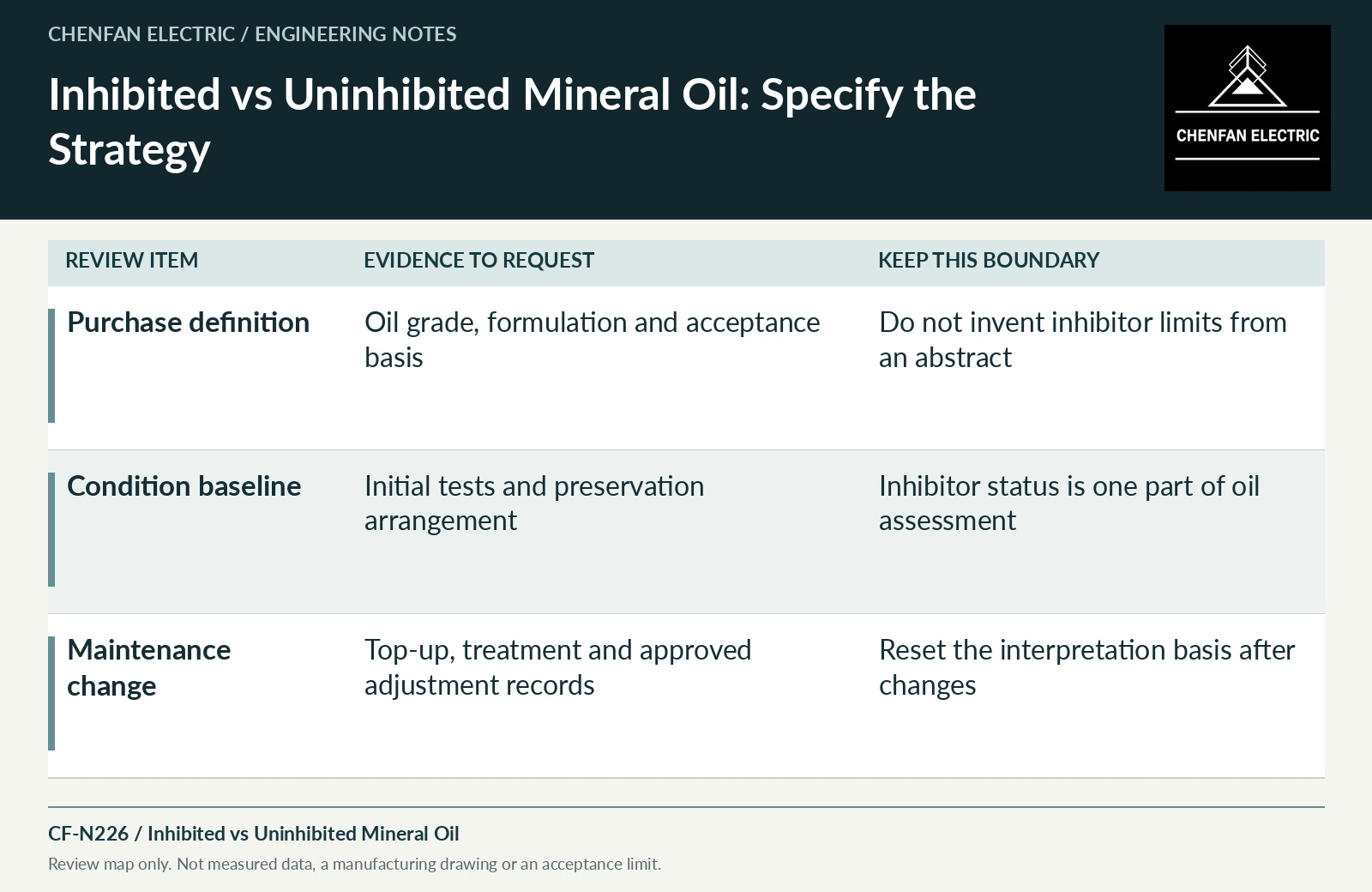
| Review item | Evidence to request | Boundary to preserve |
|---|---|---|
| Purchase definition | Oil grade, formulation and acceptance basis | Do not invent inhibitor limits from an abstract |
| Condition baseline | Initial tests and preservation arrangement | Inhibitor status is one part of oil assessment |
| Maintenance change | Top-up, treatment and approved adjustment records | Reset the interpretation basis after changes |
References and scope
- IEC 60296:2020 — Mineral insulating oils for electrical equipmentPublic standard abstract · Mineral insulating-oil specification; fluid acceptance and equipment performance are different questions.
- IEEE C57.166-2026 — Acceptance and Maintenance of Insulating Liquids in Transformers and Related EquipmentPublic standard abstract · Acceptance and maintenance of insulating liquids; equipment type, liquid family and compartment must be identified.