

The voyage can finish without visible water ingress, and the core can still become wet during unloading.
A cold metal surface exposed to warm, humid air can fall below that air’s dew point. Condensation then forms on the cargo rather than entering through a damaged container.
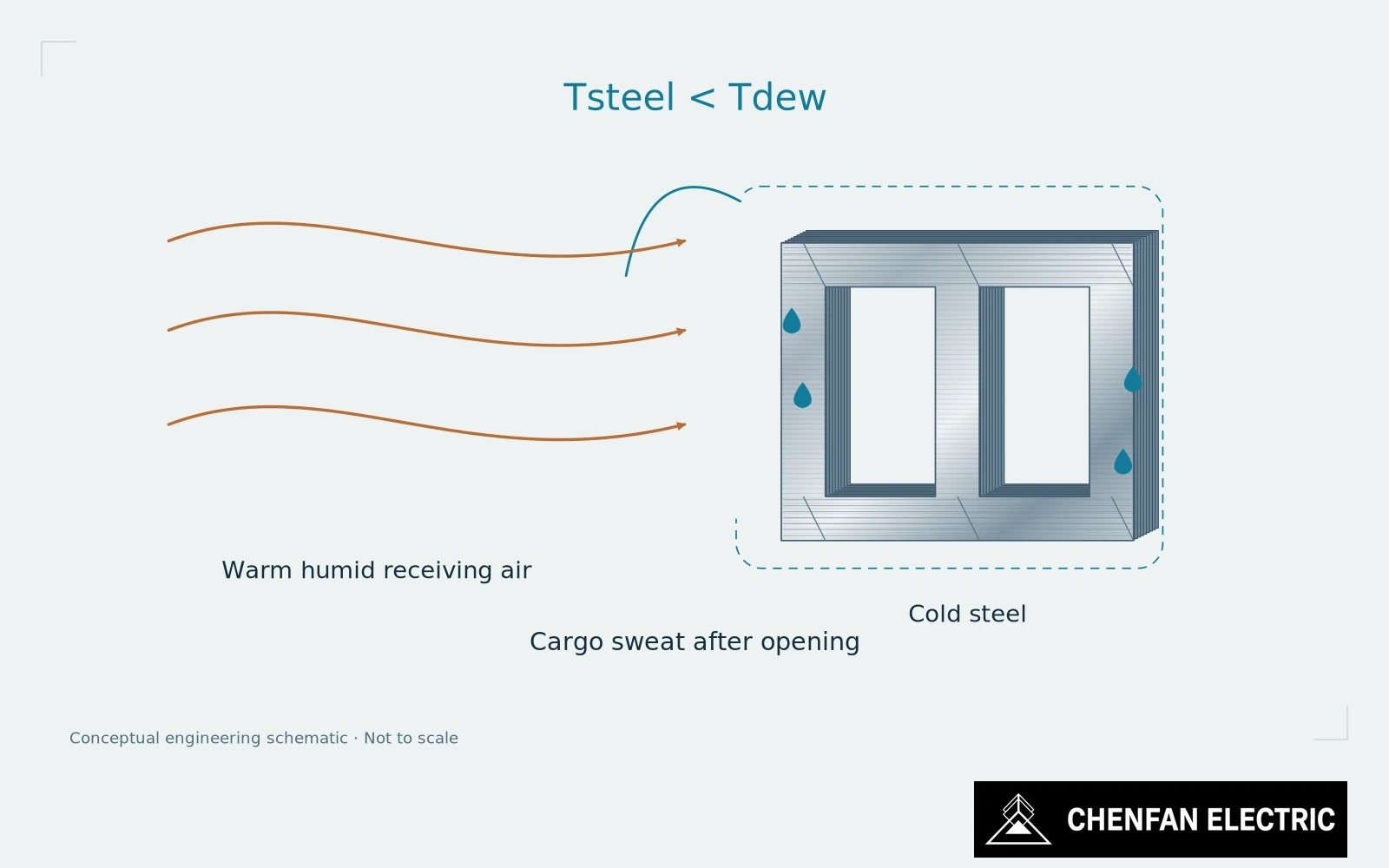
Distinguish cargo sweat from container sweat
The CTU Code distinguishes this cargo-sweat mechanism from condensation on the container interior. For core shipments, the distinction matters because the preventive actions are not identical.
A sound roof does not remove moisture already enclosed in packing materials. Conversely, a dry enclosure during transit does not by itself control exposure when a cold core is opened in a humid receiving area.
Build the protection plan around the sequence of environments: packing, inland transit, port waiting, sea passage, discharge and storage. The longest uncontrolled dwell may be ashore. A delivery estimate is therefore not a sufficient statement of the required protection period.
Review moisture exposure across the whole route
Identify where moisture can originate and where it can reach the steel. Check the initial condition of packing materials, the continuity of the selected barrier and any planned opening for inspection. Once the barrier is opened, the original preservation state cannot simply be assumed to continue.
Salt contamination is a separate exposure question. A sea voyage is not proof that salt reached the core, but a package exposed to spray or contaminated handling conditions needs appropriate assessment. Do not label every orange stain “salt damage” without evidence of the actual exposure and surface condition.
At receipt, use a procedure suited to the temperature and humidity conditions rather than automatically stripping all protection immediately. The receiving team should know how to inspect, acclimatize and store the shipment under the agreed preservation plan.
Manage opening, acclimatization and storage
Humidity indicators and shock records can support that decision, but their meaning depends on placement, operating range and what they actually measure. They are not a substitute for assessing the core and package condition.
When an extended delay occurs, review the preservation period before visible corrosion becomes the trigger for action. The original plan may no longer cover the actual dwell or the new storage environment.
For long-distance core supply, corrosion prevention ends when the assembly enters a controlled manufacturing environment, not when the vessel arrives. The receiving operation is part of the exposure history and needs an owner just as clearly as export packing does.
Practical takeaway
A core can acquire condensation after an apparently dry voyage when its protection is opened.
Chenfan Electric manufactures custom transformer cores according to customer drawings. Where applicable to the specified material and core design, agreed process controls include burr height below 0.02 mm and stacking factor above 97%. Measurement methods and acceptance conditions are defined for each order.