

A packet can look correct and still contain the wrong material identity.
Visual similarity is a weak control when approved and unapproved laminations share the same outline.
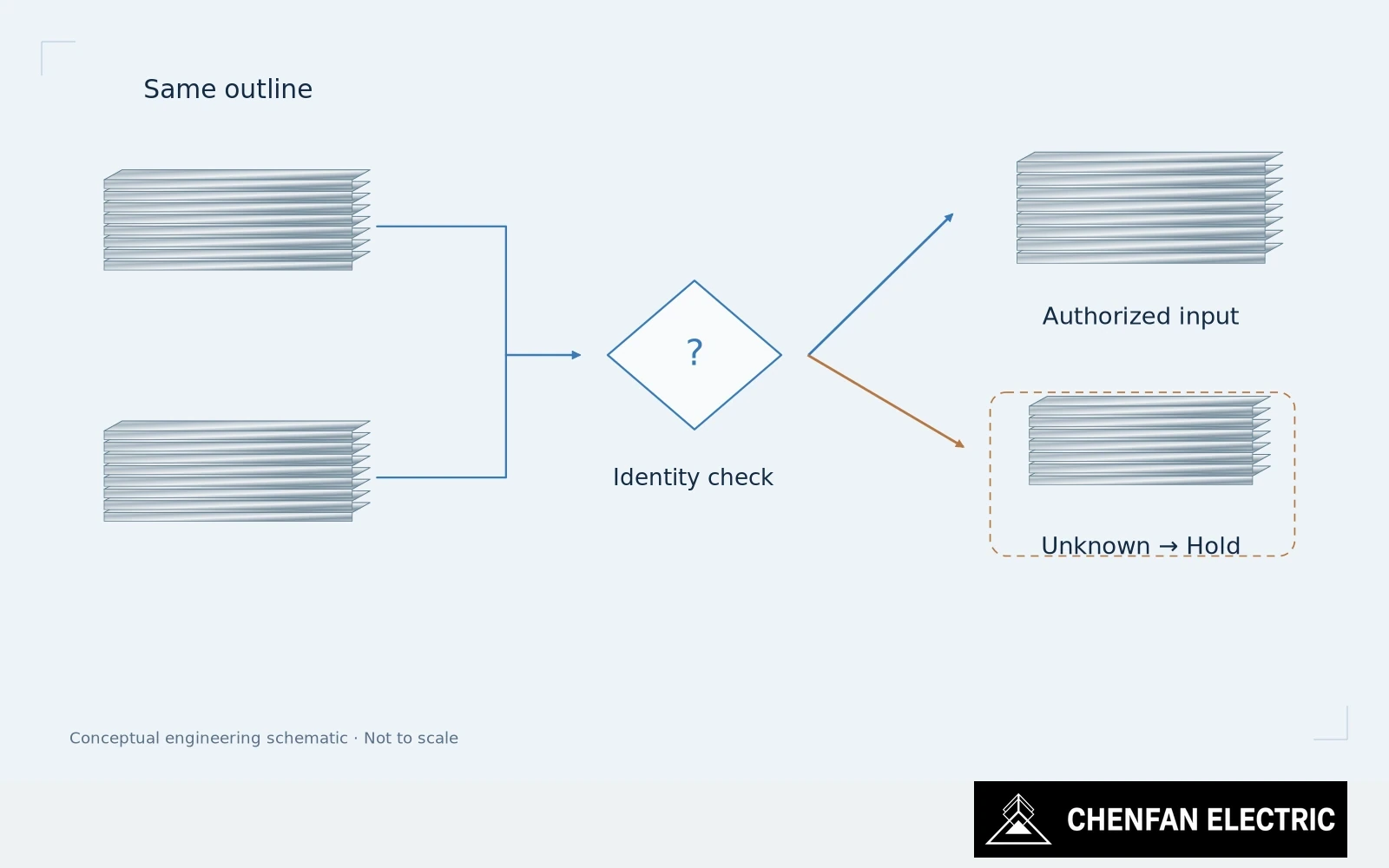
Distinguish approved combinations from unknown material
Different grades may not be distinguishable by appearance. Different gauges can also enter an otherwise familiar packet if handling and identification are weak. A completed external dimension may conceal the problem rather than expose it.
The consequences depend on what was mixed. A gauge error can change the relationship between sheet count, stack dimension and effective iron content. A grade or treatment substitution can change the magnetic design input or compatibility with the intended processing route.
Mixing approved batches is not inherently the same as mixing incompatible material. An authorized, traceable combination may be acceptable under the design and quality plan. The unacceptable situation is one in which the factory cannot establish what entered the assembly or whether the combination was permitted.
Prevent identity loss at changeovers and transfers
Control should be designed around the points where identity can be lost: job changeover, remnant storage, packet transfer, interruption and rework. Relying only on final inspection asks the inspector to reconstruct a history that may no longer be observable.
Use identified storage locations and controlled transfers, but verify the connection between the label and the physical contents. A correct barcode on the wrong packet simply digitizes the error. Line clearance and a deliberate check at material change are still necessary.
When an unidentified packet is found, quarantine it against a defined disposition. Thickness measurement alone may help distinguish gauges, but it does not prove grade or treatment identity. A magnetic spot test also should not be promoted into a complete material identification method without validation.
Contain unidentified packets before further assembly
Containment needs a boundary. Determine which jobs could have shared the transfer point or storage location, and preserve the records needed to distinguish affected assemblies. Replacing only the visibly suspect packet may leave the underlying mix-up mechanism unchanged.
The purchasing requirement should focus on material identity and change authorization, not on an unrealistic promise that no core ever contains more than one coil.
A disciplined factory can explain an approved combination. It can also stop when the combination is unknown. The danger is the packet that remains in production because it looks too familiar to question.
Practical takeaway
Identical outlines can hide incompatible grade, gauge or treatment substitutions.
Chenfan Electric manufactures custom transformer cores according to customer drawings. Where applicable to the specified material and core design, agreed process controls include burr height below 0.02 mm and stacking factor above 97%. Measurement methods and acceptance conditions are defined for each order.