

Purchasing says the supplier delivered on time.
Assembly says the core was not ready to use.
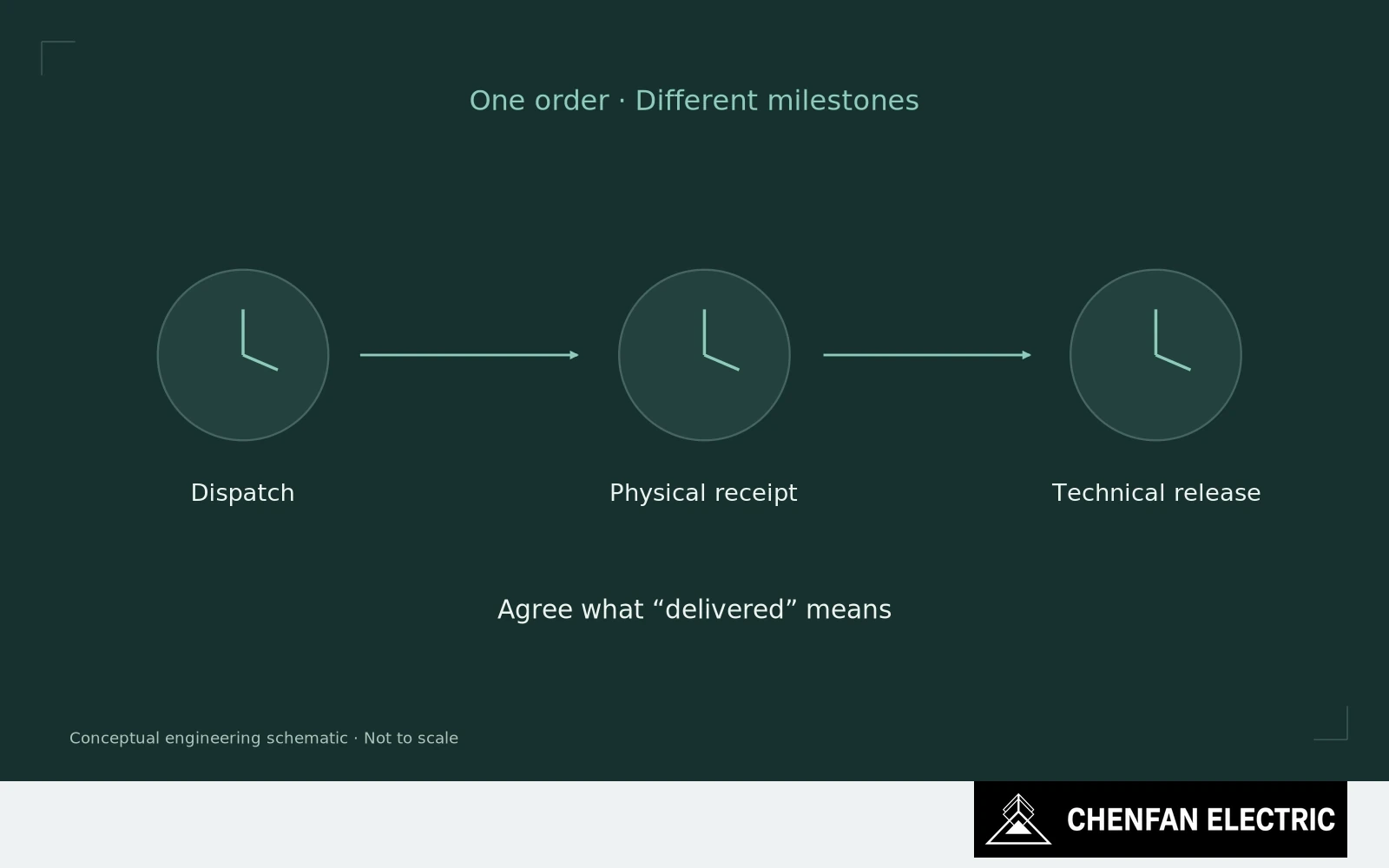
Define the same delivery and cost boundary
Both may be describing the same shipment accurately.
The disagreement often starts with the definition of delivery, not with either department misunderstanding the product.
A dispatch date, a receiving date and a technically released core are different milestones. If the supplier’s obligation ends at one while the internal production plan assumes another, the performance score will depend on who is doing the scoring.
Price has the same boundary problem. Purchasing may compare the invoiced core scope. Engineering may include drawing clarification, receiving checks, adjustments and support needed to complete integration. Neither cost view is complete unless the agreed supply boundary is visible.
Give technical response a clear outcome
Create one shared acceptance record for the order. It should identify the drawing revision, delivery configuration, critical interfaces, agreed magnetic evidence and remaining buyer operations. Then both teams can distinguish a supplier deviation from work that the contract intentionally left to the factory.
Technical response should also be defined by outcome. A quick reply is useful, but it is not the same as a resolved drawing issue. A slower response supported by a clear measurement and an approved disposition may be more useful than repeated reassurance with no decision.
This does not require purchasing to become a magnetic design department. Engineering should identify the mandatory technical gates and explain the consequence of a deviation. Purchasing should ensure that the quotation, schedule and supplier commitment include those gates.
Commercial comparison can then take place among offers with a common technical boundary. Where an exception is proposed, make its owner and consequence explicit instead of hiding it in a score or leaving it to receiving inspection.
Review shared milestones after delivery
After delivery, review the same milestones together. Record whether a delay came from supplier production, buyer approval, transport or unresolved interface work. A single late/on-time label can otherwise reward or penalize the wrong behavior.
The purpose is not to make both departments value every attribute equally. It is to give them a common object of evaluation.
A core supplier should be judged against the core and support actually purchased. Once that boundary is agreed, price, technical performance and delivery become a joint decision rather than three incompatible stories.
Practical takeaway
Conflicting supplier scores can arise from different definitions of the delivered product.
Chenfan Electric manufactures custom transformer cores according to customer drawings. Where applicable to the specified material and core design, agreed process controls include burr height below 0.02 mm and stacking factor above 97%. Measurement methods and acceptance conditions are defined for each order.