

The coil number is known.
Can you still identify every finished core that contains material from it?
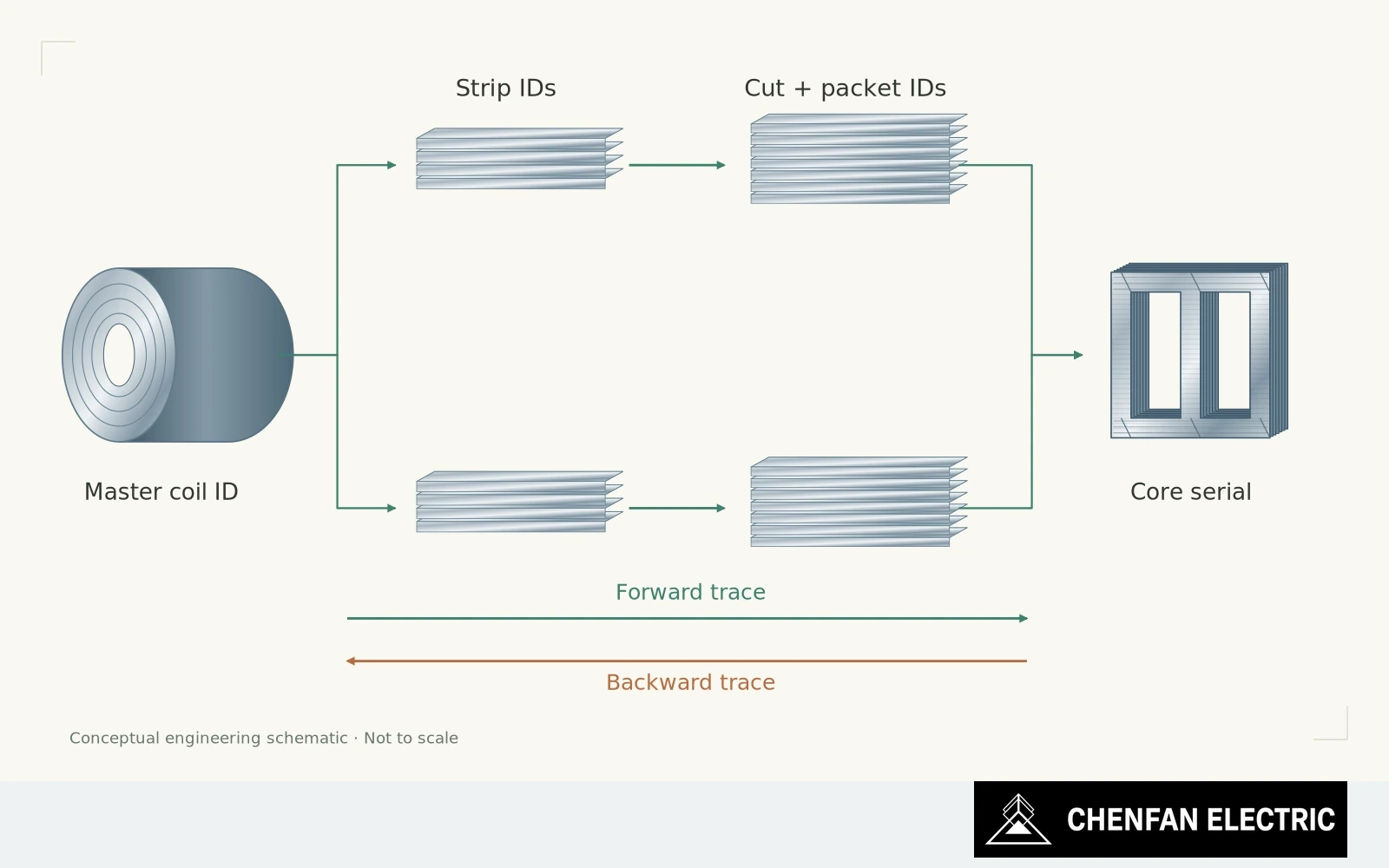
Maintain forward and backward material identity
If not, the traceability chain ends before the question most likely to matter during an investigation.
A coil is split into strips. Strips become cut laminations and packets. Packets may be divided between jobs, combined in an assembly, held as remnants or returned after rework. The difficult part is maintaining identity through those changes, not printing the original coil label.
The record needs both directions. Starting from a core serial number, identify the material and relevant processing records. Starting from a suspect coil, tool interval or cutting program, identify the potentially affected work in progress and delivered cores.
A one-way filing system may support a certificate request while still failing to define containment.
Control rework, remnants and packet transfers
At each split, preserve the parent identity and the quantity or range transferred to the child item. At each merge, record which identified inputs entered the packet or core. The level of detail should be proportionate to the process, but it must be sufficient to distinguish affected from unaffected product.
Rework is a common weak point. Replacement sheets and returned packets should not re-enter production as anonymous good material. Their identity, inspection status and destination need to remain connected to the final release record.
The same applies to remnants. A recognizable colour label or familiar stack position may help operations, but it should not be the sole source of identity after a move, shift change or interrupted job.
Link the genealogy to the relevant test result and drawing revision. Otherwise, the factory may know the material source without knowing which configuration was tested or whether the final assembly changed afterward.
Test whether the records define the affected cores
A practical audit is a retrieval exercise. Select a finished core and trace it backward. Then select an input or process interval and trace it forward. Check whether the two views reconcile, including scrap, rework and remaining inventory where relevant.
The goal is not a database containing every possible field. It is a reliable answer to an operational question: which units need attention when a specific input or process condition is found to be suspect?
Traceability earns its value when it narrows that answer accurately. A folder of certificates that cannot locate the affected cores has not completed the job.
Practical takeaway
Knowing a coil number is insufficient unless affected finished cores can be identified in both directions.
Chenfan Electric manufactures custom transformer cores according to customer drawings. Where applicable to the specified material and core design, agreed process controls include burr height below 0.02 mm and stacking factor above 97%. Measurement methods and acceptance conditions are defined for each order.