


Transformer Core Engineering Notes · CF-N278
An oil sample is useful only when its origin, collection method and handling are appropriate to the intended analysis. Valve access is therefore a design issue as well as a maintenance convenience. Specify the sampling points and their identities early, while leaving collection procedures to qualified personnel using the applicable laboratory and OEM requirements.
Identify the liquid system and sampling point
Record whether a point serves the main tank, a tap-changer compartment or another isolated circuit. Label it consistently on the equipment, drawing and sample record. The physical location can affect what the sample represents, particularly when circulation is limited or a compartment is separate. Do not combine results from differently identified points into one trend without understanding whether they describe the same liquid population.
Provide safe, practical access
Review the sampling point’s position relative to hot surfaces, electrical clearances, containment and working access. The valve and connection must be compatible with the liquid and approved sampling arrangement. A valve hidden behind a radiator or inaccessible after civil work may encourage unsafe improvisation. The site and OEM should agree a practical arrangement that qualified personnel can use under the approved operating and safety procedure.
Match collection to the analysis
Moisture, dissolved-gas and other analyses can have different sensitivity to contamination, air contact and sample handling. Use the laboratory’s specified containers and methods together with the OEM’s requirements. This article gives no universal flushing quantity or collection sequence. The sample record should include relevant temperature, operating condition and handling information so an unusual result can be assessed for both equipment condition and sampling quality.
Preserve comparability and traceability
Keep sample identity, date, point, liquid type and laboratory method associated with each result. A liquid replacement or changed sampling location can interrupt the old trend’s comparability. Unexpected results should be reviewed by competent specialists, with repeat sampling when justified rather than automatically dismissed or treated as a confirmed fault. Good valve design supports trustworthy evidence; it does not guarantee that every collected sample is representative.
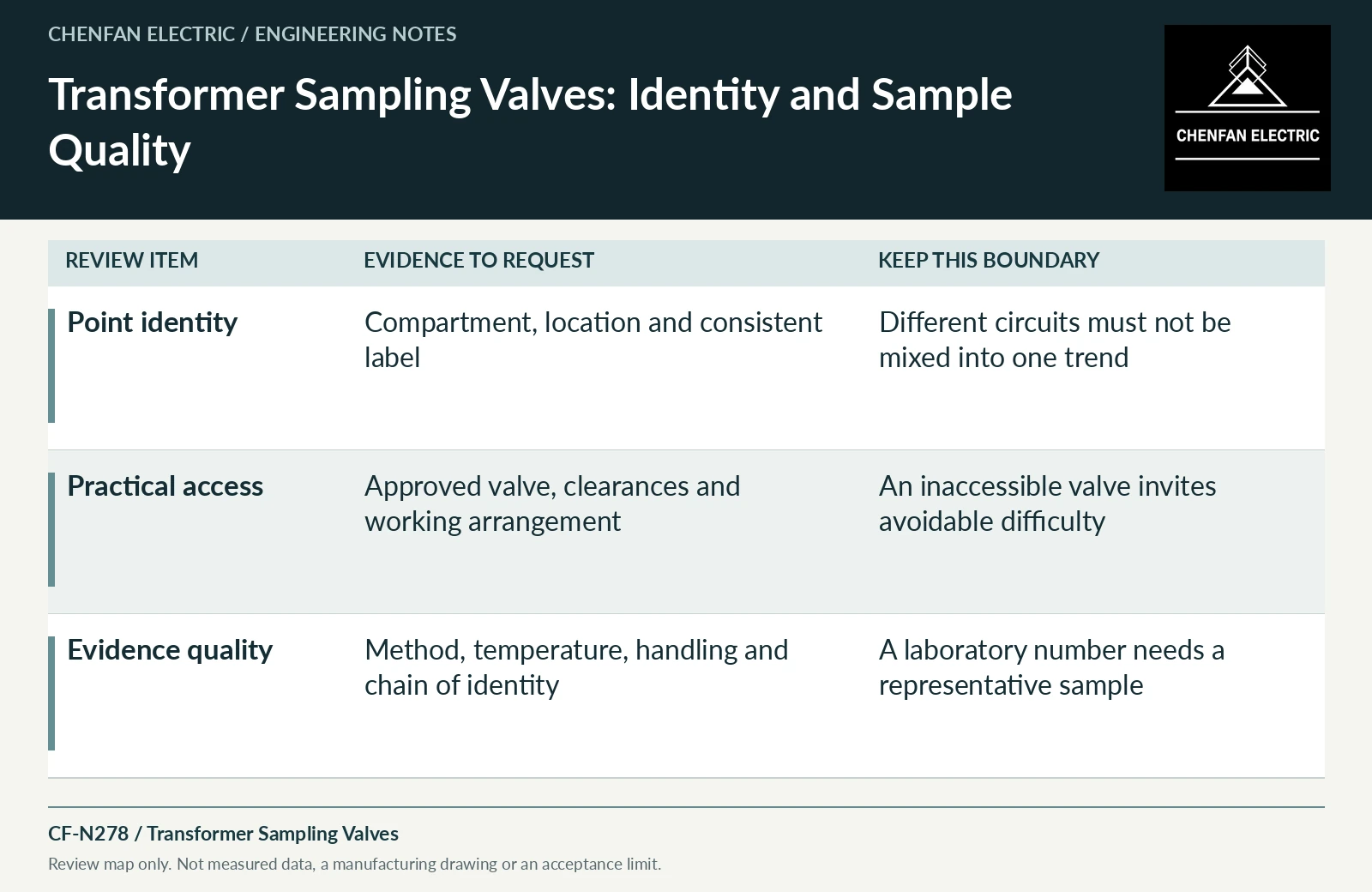
| Review item | Evidence to request | Boundary to preserve |
|---|---|---|
| Point identity | Compartment, location and consistent label | Different circuits must not be mixed into one trend |
| Practical access | Approved valve, clearances and working arrangement | An inaccessible valve invites avoidable difficulty |
| Evidence quality | Method, temperature, handling and chain of identity | A laboratory number needs a representative sample |
References and scope
- IEEE C57.166-2026 — Acceptance and Maintenance of Insulating Liquids in Transformers and Related EquipmentPublic standard abstract · Acceptance and maintenance of insulating liquids; equipment type, liquid family and compartment must be identified.
- IEEE C57.162-2025 — Interpretation of Moisture Related Parameters in Liquid Immersed Transformers and ReactorsPublic standard abstract · Moisture-related interpretation for liquid-immersed transformers; this is not a DGA guide.